Dreamer's Four Nights
A nameless man falls in love over four nights in St. Petersburg and loses her by the fifth. Dostoevsky wrote this in 1848 and somehow got the loneliest feeling in the world exactly right.

prashant
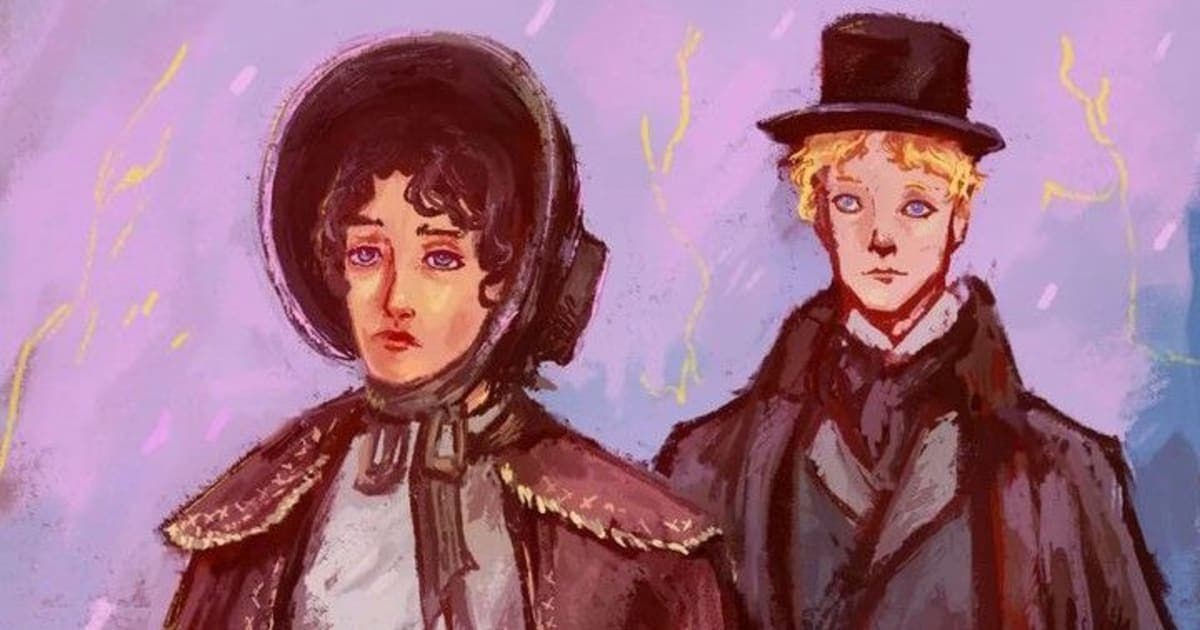
I first read White Nights during a stretch when I wasn't sleeping well. I picked it up at midnight and finished it by 2 AM which, for a novella, isn't unusual but I remember sitting afterward feeling genuinely unsettled in the way that only certain books manage. Not disturbed. Just quiet. Like something had put a name on something in me I hadn't quite articulated yet.
The story is almost absurdly simple. A young man, unnamed throughout, wanders the canals of St. Petersburg during the white nights of early summer, when the northern sun barely sets and the city sits in a strange continuous twilight that makes everything feel slightly out of time. He is desperately lonely. Not in a dramatic way; more in the way of someone who has accidentally built a very full inner life and a very empty outer one. He has lived in Petersburg for eight years and has no close acquaintances. He talks to the buildings he likes. He has favourite houses.
Then he meets Nastenka over a canal railing, and over the next four nights, they talk.
She tells him about a man she loves — a lodger who boarded with her and her grandmother for a year, who promised to return for her and hasn't. The Dreamer, which is what Dostoevsky calls his protagonist, listens, falls for her anyway, and tries to help her get word to the man she's waiting for. It's an almost comically self-defeating arrangement, and he walks into it with his eyes open. He even tells Nastenka about himself: about how he escapes into elaborate inner fantasies until weeks pass and nothing in his actual life has moved. He confesses this like someone naming a disease they've made their peace with.
What Dostoevsky does with the ending is the strangest and most honest part. Nastenka's original love returns. She leaves with him. She sends the Dreamer a letter apologizing full of guilt and genuine affection, the kind of letter you write when you know you've hurt someone who didn't deserve it. And the Dreamer, in the final paragraph, doesn't collapse or rage. He says, essentially: one moment of happiness is enough for a whole lifetime. He is grateful.
I've read that final page at least five times and I still don't know if it's wisdom or a very elaborate form of giving up. Maybe Dostoevsky didn't know either. That uncertainty is exactly what makes the book feel true.
What I keep coming back to is what it means to be a Dreamer in the way Dostoevsky describes it. Not simply introverted or imaginative something more specific. A condition where inner life has become so satisfying that it substitutes for actual life. The Dreamer doesn't just have fantasies; he inhabits them. He becomes the hero of invented stories while his real story sits still. And he knows this about himself, describes it almost clinically to Nastenka, and still can't stop doing it.
I recognize the pattern. Not just in myself, but in people close to me the ones who are genuinely perceptive, who feel things deeply and notice everything, and who still somehow keep missing their own lives because they're spending so much time inside their heads watching the version that could have been. We've given this condition better tools since 1848. You can scroll for three hours and feel like you've been somewhere. You haven't. The Dreamer's problem is old and we've handed it a phone and a feed and called it connection.
The St. Petersburg setting isn't incidental. Dostoevsky chose the white nights specifically because that light — too bright to be night, too dim and strange to be actual day puts the whole story in suspension. The city becomes dreamlike. Real and unreal at the same time. It's the only appropriate setting for a man like the Dreamer, and for a love story that is also, depending on how you're reading it, an extended hallucination. Dostoevsky understood that places can make certain emotional states feel possible or impossible. He used the northern summer sky the way another writer might use music.
This was Dostoevsky at twenty-six, before Siberia, before the epilepsy fully arrived, before the heavy philosophical scaffolding of his later work. The books he'd go on to write Crime and Punishment, The Idiot, The Brothers Karamazov are harder and stranger and in some ways greater. But they don't have this particular texture. There is something in White Nights that the older Dostoevsky couldn't have written: a softness, a clarity about what it actually costs to live entirely inside yourself and only touch the real world for four nights in June.
The Dreamer is not tragic in the classical sense. He doesn't fall or destroy anything. He loves briefly and honestly and then returns to what he was, only now with a memory. He chooses to call it a blessing. Whether you believe that choice or read it as the saddest line in Russian literature depends on where you're standing in your own life when you get there.
I was 19 and living alone in a new city and it was 2 AM, and it landed differently than it might have otherwise.
Dostoevsky wrote this quickly, the way young writers sometimes write their best things before they start worrying too much about what they're doing. It shows, in the best way. White Nights is not trying to be profound. It just is, because it's honest, and the honesty is specific enough to find you wherever you are.
That's rarer than it sounds. Most books about loneliness are too general or too sorry for themselves to actually sting. This one lands quietly and doesn't leave.