The Self That Buddhism Says Doesn't Exist
"Buddhism has a sharper answer to what the self actually is than anything I'd read from the West. Its answer: the self doesn't exist."

prashant
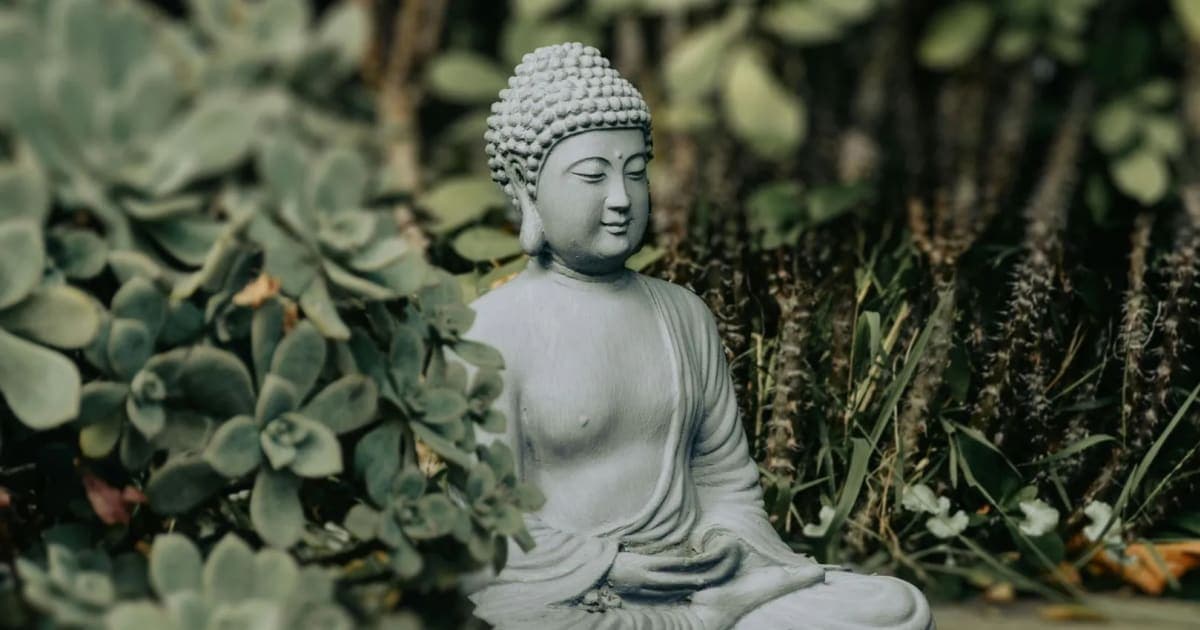
There's a particular kind of discomfort that comes from sitting still. Not physical discomfort though that too but the kind that arrives when you stop doing things and the mind turns around and looks at itself. Most people fill that gap with a phone screen. Buddhism, for thousands of years, has asked you to sit with it.
I came to Buddhism the way most people do: sideways, through something else. In my case it was philosophy Camus mostly, and before that a long obsession with Dostoevsky's characters tearing themselves apart in pursuit of something they couldn't name. I was interested in the question of what the self actually is, and Buddhism had a sharper answer to that than anything I'd read from the West.
Its answer: the self doesn't exist. Not in the way you think it does.
This is the doctrine of anatta no-self. The Buddha argued that what we call "I" is really a bundle of constantly changing processes: sensations, perceptions, mental formations, consciousness. None of these has a permanent core. None of them is you in any stable, enduring sense. The thing you defend in arguments, the thing you're so protective of, the thing you keep trying to understand it's more like a river than a stone. Flowing, yes. Present, yes. But not fixed. Not solid.
The first time I really sat with this idea, it felt less like philosophy and more like vertigo.
Western philosophy mostly goes the other way. Descartes builds his entire system on the certainty of a thinking self. Sartre says existence precedes essence, which sounds radical until you realize it still assumes there's an "I" doing the existing. Even Camus, who I love, keeps the absurd human as a real protagonist someone who shakes their fist at a silent universe. There's still a fist. There's still someone shaking it.
Buddhism removes the fist.
And here's where it gets genuinely uncomfortable. If there's no stable self, then the suffering you experience isn't happening to a real, unified "you." It's just happening. The anxiety about the future, the grief about the past, the relentless internal narrative that runs like a broken news ticker — none of it belongs to a permanent someone. It's weather. And weather passes.
This should be reassuring. It often doesn't feel that way.
The Buddha's framework, laid out in the Four Noble Truths, starts with dukkha usually translated as suffering, though "unsatisfactoriness" is probably closer. Life has this quality of never quite landing where we want it to. We get what we want and it doesn't feel the way we imagined. We lose what we had and we can't stop wanting it back. The diagnosis is direct: this suffering comes from clinging. And clinging comes from the mistaken belief that there's a permanent self capable of holding onto things.
The solution, at least in early Buddhist thought, isn't belief in something better. It's seeing clearly. The Noble Eightfold Path is mostly practical — right understanding, right intention, right speech, right action, right livelihood, right effort, right mindfulness, right concentration. It reads less like theology and more like a training manual for attention.
That's what makes Buddhism strange to a modern Western mind. It doesn't ask you to believe anything. It asks you to look.
Meditation which most people now encounter stripped of its context, repackaged as a productivity tool is really just a technique for that looking. You sit, you watch the breath, and you notice how the mind moves. How it grabs things. How it constructs stories. How the "I" keeps reasserting itself even when you're trying to observe it. There's something almost comic about the whole project: you're trying to watch yourself, and the act of watching keeps reminding you that you exist.
Mahayana Buddhism, which developed later, goes further than the early path. The Bodhisattva ideal holds that enlightenment isn't something you keep for yourself you come back, you stay in the cycle until all beings are free. There's a warmth in this that the earlier, more austere tradition sometimes lacks. Less about escaping the world, more about learning to love it properly, even knowing what it is.
What I keep returning to is how Buddhism treats the relationship between suffering and clarity. It doesn't say: be positive. It doesn't say: find meaning in your pain. It says: look at what's actually happening. The suffering usually comes from the gap between what is and what you're insisting it should be. Close that gap not by changing the world, but by seeing it more accurately.
That's a harder practice than it sounds. The mind is sticky. The self keeps reassembling itself no matter how clearly you've just seen through it. One good meditation session doesn't undo years of habit.
But there's something in the idea that understanding the machinery of your own suffering is the beginning of something. Not salvation Buddhism is suspicious of that word. Not permanent peace either. Just a bit more room between the feeling and the reaction. A small but real gap where you get to decide what happens next, rather than just being swept along.
Buddhism doesn't promise you meaning. It doesn't promise that the universe cares. In that sense it's not so different from Camus both are looking at a world that doesn't answer back and asking what you do with yourself in the meantime.
The difference is that Buddhism thinks the question "what am I?" might be the wrong question to begin with.
I don't know if I believe that. But it's the most interesting wrong answer I've come across.