You Are Condemned to Be Free
condemned-to-be-free-existentialism

prashant
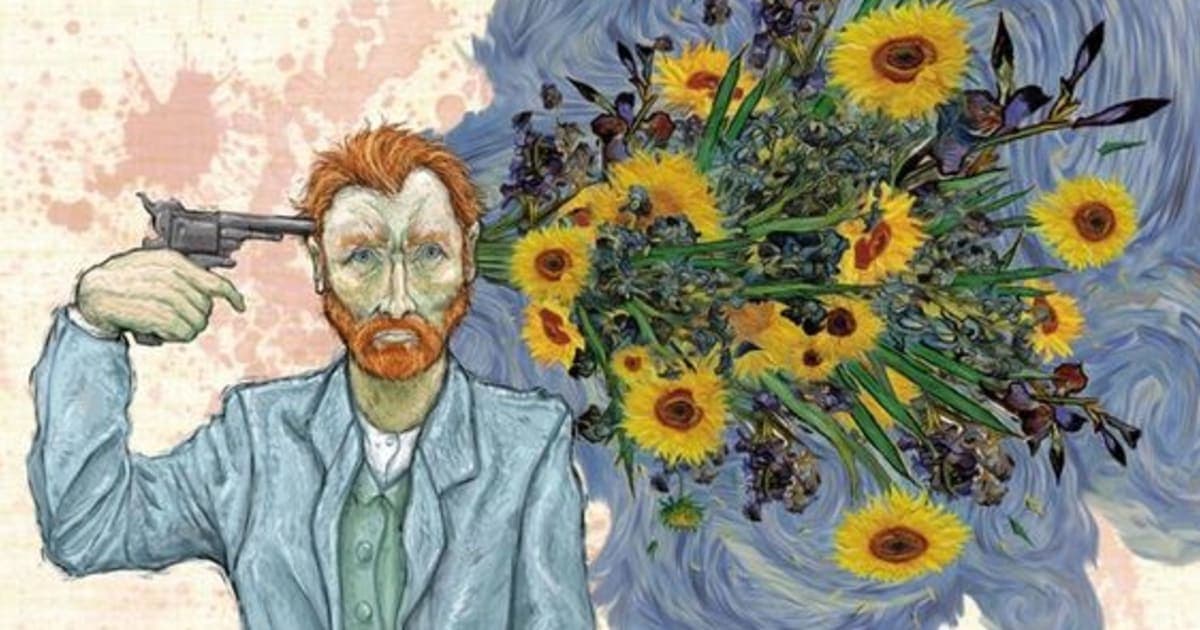
Existentialism confronts us with a radical idea: we are radically free, wholly responsible, and utterly alone in a universe without inherent meaning. From Kierkegaard’s leap of faith to Camus’s absurd rebellion, this philosophy offers not despair but a bracing call to authentic living. In an age of burnout and endless choices, its lessons have never been more urgent.
You wake up, reach for your phone, and before your feet touch the floor you are faced with a dozen tiny choices. What to have for breakfast, which podcast to play, how to reply to a message without sounding too eager or too distant. Later, you’ll curate your profile, pick a filter, decide which version of yourself to present to the world. At work, you’ll be told to “bring your whole self” while also hitting metrics you never chose. In the evening, you’ll scroll through headlines of climate collapse, political chaos, and the curated joy of others, feeling something you can’t quite name. It’s not just exhaustion. It’s a quiet, creeping sense that none of it comes with a manual, that no one is going to tell you what any of this is for. That feeling has a name, and a surprisingly hopeful philosophical tradition has been mapping its terrain for over a century: existentialism.
Existentialism is not a unified school but a family of thinkers who share one scandalous starting point: existence precedes essence. Unlike a chair, which is designed and built for a purpose before it exists, a human being appears in the world first and then shapes what they are through action and choice. There is no pre-written human nature, no cosmic blueprint, no destiny that carves your path in advance. You are thrown into a world that doesn’t whisper your purpose. You have to invent it. This is less a comforting idea than a terrifying one, and every major existentialist begins with the vertigo it produces.
Søren Kierkegaard, often called the father of existentialism, was a 19th-century Danish philosopher who watched his comfortable, churchgoing neighbours live as if their souls were already saved. He saw in them a quiet avoidance of what he called anxiety — the dizzying awareness of one’s own freedom. For Kierkegaard, real living demands a subjective, passionate commitment in the face of uncertainty. He didn’t think you could prove the meaning of life by sitting in an armchair and reasoning it out. You have to take a leap, one that logic can’t soften. His answer was Christian faith, but the structure he uncovered is secularly portable: meaning is not found, it is chosen, and the act of choosing it with your whole being is what makes it real. To refuse to choose is still a choice, one made in what he would call despair.
Jean-Paul Sartre took this idea and stripped it of the divine. In his 1945 lecture “Existentialism is a Humanism,” he offered the phrase that still jolts readers today: we are “condemned to be free.” There is no God, no fixed human nature, no external justification for your actions, yet you are burdened with total responsibility for them. If you say, “I’m just following orders,” or “I had no choice because society made me this way,” Sartre would call that bad faith — a lie you tell yourself to dodge the weight of your own freedom. He gives the famous example of a waiter who moves with exaggerated precision, becoming a waiter-thing rather than a person who is waiting tables. In that performance, the man hides from the fact that he could at any moment set down the tray and walk away. Bad faith feels safer than staring into the abyss of possibility, but it hollows you out. For Sartre, authenticity is the ongoing project of owning your choices, even when there are no cosmic guarantees. And because your freedom is bound up with the freedom of others — you cannot be fully free if you objectify someone else — ethics isn’t an add-on. It’s built into the structure of facing your own freedom honestly.
Simone de Beauvoir, Sartre’s lifelong intellectual partner, transformed this into a living, breathing morality in her 1947 work The Ethics of Ambiguity. She saw that the human condition is ambiguous: we are conscious subjects who can transcend our situation, yet we are also objects in the world, shaped by our bodies, our histories, and the gaze of others. The temptation is to collapse into one side — to cling to the safety of being an object with a pre-assigned role, or to flee into an abstract freedom that treats others as mere obstacles. De Beauvoir argued that genuine ethics means willing one’s own freedom in a way that also wills the freedom of others. Her later masterpiece The Second Sex applied this lens to womanhood, showing how women had been defined as the Other, the inessential mirror for a supposedly universal male subject. “One is not born, but rather becomes, a woman” — that line is existentialism in its most potent, world-shaking form. It is a declaration that identity is not destiny, that even the heaviest social scripts can be confronted, exposed, and rewritten. In de Beauvoir’s hands, existentialism becomes not a solitary male drama of angst but a shared struggle for liberation, shot through with care.
Then there is Albert Camus, who often bristled at the existentialist label but walked right alongside it. For Camus, the central problem is the absurd: the collision between our deep human hunger for meaning and the universe’s resolute silence. He opens The Myth of Sisyphus with a line that stops the breath: “There is but one truly serious philosophical problem, and that is suicide.” If life is inherently meaningless, why keep living? Camus refuses both the physical escape of suicide and the philosophical suicide of pretending to find a meaning that isn’t there. Instead, he imagines Sisyphus, condemned to push a boulder up a hill for eternity, finding his rock, his hill, his struggle, and in that moment picturing him happy. The happiness isn’t delusion. It’s a lucid revolt. By staring into the absurd without flinching and choosing to live fully anyway — to love this world despite its silence — we win back our dignity. Camus’s later novel The Plague shows what this looks like in practice: ordinary people fighting a faceless epidemic not because they expect to win, but because that is what decency demands. There is no grand finale, no permanent cure, just the ongoing, stubborn work of healing in a world that will always produce suffering.
Why does any of this matter now, in an age of algorithms and wellness apps? Precisely because the conditions these thinkers diagnosed have only intensified. We are flooded with choices — what to believe, who to be, which career, which relationship, which self — and yet the culture offers us an endless menu of prefabricated identities to slip into. Bad faith has never been easier. You can let an online quiz tell you your personality type, follow a life script handed to you by your family or your social feed, and never once face the terrifying freedom of deciding for yourself. The anxiety Kierkegaard described hasn’t gone away; we’ve just pathologized it into a disorder to be medicated and optimized, forgetting that a certain amount of dizziness in the face of the infinite is the most human thing there is.
The call to authenticity in a hyper-curated world is especially sharp. When we present ourselves on social media, we are constantly tempted to become Sartre’s waiter — performing a self for likes rather than living from a genuine, evolving core. Authenticity, in existentialist terms, is not about finding your “true self” like a buried treasure. It is the ongoing act of choosing your values and taking responsibility for them, even when the world rewards performance over substance. It means admitting you don’t have all the answers, that you are a work in progress, and that you could, at any moment, change your life.
On a larger scale, the absurd is palpable in the crises of the 21st century. Faced with the scale of climate breakdown, war, and systemic injustice, it is easy to fall into nihilism or to grasp at simplistic certainties. Camus offers a third path: lucidity and solidarity. We can know the odds are grim and still act, not because we are sure of success, but because the struggle itself is what makes life meaningful. The rebellion isn’t a single victorious battle; it’s an everyday practice of showing up for the world we love, even as it breaks our hearts.
Existentialism also gives us language for the loneliness of modern freedom. In a world where traditional structures of meaning — religion, tight-knit community, lifelong careers — have weakened, we are left with the exhilarating and exhausting task of inventing our own significance. This is not a flaw to be fixed but the very condition of being a conscious human. Sartre’s “man is nothing else but what he makes of himself” can feel like a crushing weight, but it is also the ultimate permission slip. If your life has no predetermined meaning, then no failure is final, no script is mandatory, and no yesterday can force tomorrow’s hand. You are, terrifyingly and wonderfully, a beginning again each morning.
Perhaps the most tender insight across this tradition is that meaning is not a solo project. De Beauvoir understood that freedom realises itself in relationship; we need others to witness our choices and to hold the space in which we become. Even Sisyphus, alone on his mountain, is made bearable by our collective recognition. In a splintered world, existentialism invites us to look at the stranger beside us and see not a fixed category but a freedom as vast and fragile as our own, and to act in a way that helps that freedom flourish.
So the next time you feel that nameless anxiety, the sense that the universe didn’t supply a map, try reframing it. It is not a malfunction. It is the vibration of a life that is still being chosen, the hum of a conscience that refuses bad faith. Existentialism does not hand you a comforting story. It hands you back to yourself. And in a time of infinite noise, that may be the quietest, most revolutionary gift of all.